
Heating Repair in the Elgin National Watch Historic District, Elgin, IL
The Elgin National Watch Historic District stands as one of the most architecturally significant neighborhoods in all of northern Illinois. With homes and buildings dating back to the late 1800s and early 1900s, this area carries a rich legacy tied to the watchmaking industry that once defined Elgin. At Lea Heating & Air Conditioning, we understand that maintaining comfort in these historic properties requires specialized knowledge, careful attention to existing infrastructure, and a deep respect for preservation. As a second-generation, family-owned HVAC provider in Northeast Illinois, we bring decades of hands-on experience to every heating repair call in this storied neighborhood.
Understanding Heating Systems in Historic Properties
Homes in the Elgin National Watch Historic District were built during an era when heating technology looked vastly different from what we rely on today. Many of these structures originally used coal-burning furnaces, steam radiators, or gravity-fed hot air systems. Over the decades, homeowners have upgraded and retrofitted these systems, but the underlying architecture still presents unique challenges. Ductwork may follow unconventional paths through plaster walls and hardwood floors. Boiler systems may occupy tight basement spaces with limited clearance. Radiator piping may run through walls that cannot be easily opened without risking damage to original woodwork and plaster.
When we respond to a heating repair call in this district, our technicians evaluate not just the mechanical failure but the entire system context. We assess how the heating equipment integrates with the home’s structure, identify potential code compliance issues, and determine the most effective repair strategy that preserves both comfort and architectural integrity. Having provided HVAC service in the Northwest Suburbs for over 48 years, we have encountered virtually every type of heating configuration imaginable in older homes throughout the Elgin area.
Common Heating Repairs We Handle in the Historic District
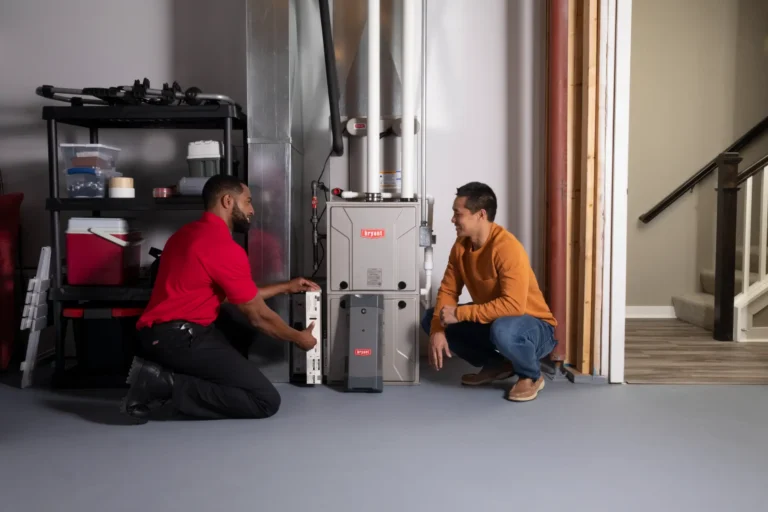
The types of heating repairs we perform in the Elgin National Watch Historic District span a wide range, from straightforward component replacements to complex system diagnostics. Furnace ignition failures are among the most frequent issues we address, particularly in aging gas furnaces where ignitors, flame sensors, and gas valves wear out over time. A cracked heat exchanger is another serious concern, especially in furnaces that have been operating for fifteen or more years. Carbon monoxide leaks from compromised heat exchangers pose genuine safety risks, which is why we conduct thorough combustion analysis during every repair visit.
Boiler systems, which remain common in many historic district homes, present their own set of repair needs. Circulator pump failures, expansion tank malfunctions, leaking zone valves, and sediment buildup in older cast iron radiators all require experienced diagnosis. Steam boiler systems demand even more specialized expertise, as proper water levels, pressure settings, and steam trap functionality must all work in harmony. We also frequently repair hydronic baseboard heating systems that were installed as mid-century upgrades in these older homes. Continuing 45 years of excellence in the residential and light commercial heating, cooling, indoor air quality, and hot water fields, we exemplify leading innovation and proven integrity in every repair we undertake.
Our Diagnostic Process and Repair Methodology
Effective heating repair begins with accurate diagnosis. When our technicians arrive at a home in the historic district, we follow a systematic approach that eliminates guesswork and ensures lasting results. We start with a comprehensive interview, asking homeowners about the symptoms they have observed, when the problem began, and any unusual sounds, smells, or performance changes. This initial conversation often provides critical clues that guide our inspection.
From there, we conduct a visual and mechanical inspection of the heating equipment. We check electrical connections, measure voltage and amperage at key components, test safety controls, inspect flue systems, and evaluate airflow or water flow depending on the system type. For gas-fired equipment, we perform gas pressure testing and combustion efficiency analysis using specialized instruments that measure carbon monoxide, oxygen levels, and temperature differentials. These readings tell us precisely how efficiently the system is operating and whether any combustion hazards exist.
Once we identify the root cause of the problem, we explain our findings clearly and present repair options before proceeding with any work. We believe homeowners deserve to understand what is happening with their heating system and why a particular repair is necessary. This transparent approach has been fundamental to how we operate since our earliest days serving the Elgin community.
Challenges Specific to Heating Repair in Historic Homes
Working in the Elgin National Watch Historic District means navigating challenges that simply do not exist in newer construction. Older homes often lack the standardized framing dimensions and utility access points found in modern builds. Replacing a furnace or boiler may require creative problem-solving to maneuver equipment through narrow doorways, steep basement stairs, or confined mechanical rooms. Electrical panels in some historic homes may not support the amperage requirements of modern HVAC controls without upgrades. Venting systems may need to be reconfigured to meet current building codes while respecting the home’s exterior appearance.
We also encounter situations where previous contractors performed substandard work, leaving behind improperly sized ductwork, incorrectly piped boiler systems, or jury-rigged electrical connections. These issues compound over time and can mask the true source of a heating problem. Our experienced technicians know how to trace problems back through layers of previous modifications to find and fix the actual underlying issue.
Keeping Your Historic Home Comfortable Year-Round
Preventive maintenance plays a crucial role in minimizing emergency heating repairs, particularly in older systems. We recommend annual heating system inspections that include the following key service items:
- Burner cleaning and adjustment to maintain optimal combustion efficiency and reduce carbon monoxide risk
- Heat exchanger inspection using visual examination and combustion analysis to detect cracks or corrosion early
- Blower motor and belt evaluation to ensure proper airflow and prevent mid-season breakdowns
- Thermostat calibration and testing to verify accurate temperature control throughout the home
- Safety control verification including limit switches, rollout switches, and pressure switches
- Flue and venting inspection to confirm proper draft and safe exhaust gas removal
- Filter replacement and airflow assessment to protect equipment longevity and indoor air quality
According to the U.S. Department of Energy, properly maintained heating systems operate up to 25 percent more efficiently than neglected equipment. For homeowners in the historic district managing older systems, this efficiency gain translates directly into lower utility bills and fewer unexpected breakdowns during the coldest months of an Illinois winter.
Why Local Experience Matters for Heating Repair
The Elgin National Watch Historic District is not just another neighborhood. It represents a unique intersection of architectural heritage, community pride, and practical homeownership challenges. We at Lea Heating & Air Conditioning have spent decades building relationships with families throughout Elgin, Algonquin, Carpentersville, Hoffman Estates, Sleepy Hollow, and West Dundee. We understand the housing stock in this region intimately, and that familiarity translates into faster, more accurate diagnoses and repairs that stand the test of time. When your heating system fails on a bitter January night, you want a team that knows your neighborhood, knows your equipment, and knows how to get your home warm again without delay. That is exactly what we deliver, every single time.