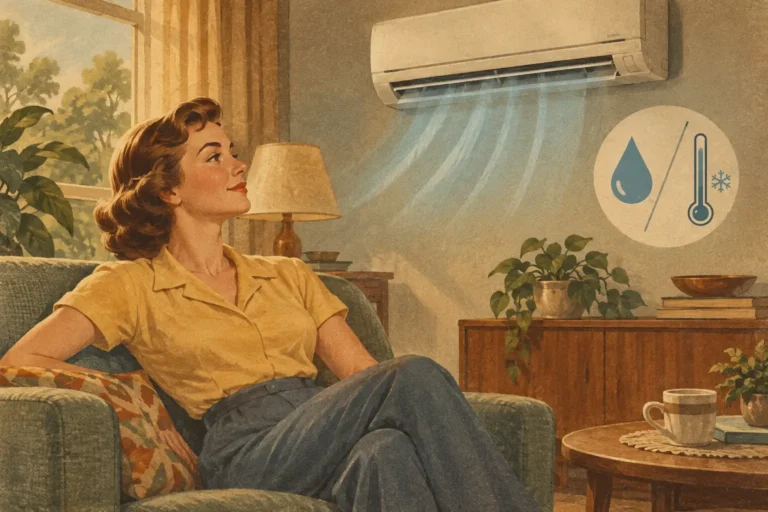
A house can read 72 degrees on the thermostat and still feel sticky, smell musty, or leave everyone reaching for the ceiling fan. That is the frustrating part of summer humidity: temperature alone does not define comfort. If you are wondering how to reduce AC humidity, the answer usually starts with helping your air conditioner run long enough, drain properly, and match the needs of the building.
In Northeast Illinois, humid stretches can expose issues that went unnoticed during milder weather. A properly operating air conditioner removes heat and moisture at the same time. When something interrupts that process, indoor humidity rises, comfort drops, and your system may work harder without delivering the relief you expect.
How to reduce AC humidity at the thermostat
Start with the settings you can control. Set the thermostat fan to Auto, not On. In Auto mode, the blower runs only during a cooling cycle. When the compressor stops, moisture on the indoor evaporator coil has time to drain away through the condensate line.
With the fan set to On, the blower can continue moving air across that damp coil after cooling stops. Some of that moisture can re-enter the air, making the home feel more humid even though the system is running. Continuous fan operation can still be useful for certain air circulation concerns, but it is usually not the best first setting when humidity is the problem.
Avoid setting the temperature dramatically lower just to force the system to run. That approach can make rooms uncomfortably cold, increase energy use, and fail to solve the underlying issue. A temperature around 72 to 76 degrees is comfortable for many households, but the right setting depends on insulation, sun exposure, occupancy, and personal preference. The bigger goal is a relative humidity level generally between 40% and 60%, with many homes feeling best near 45% to 50%.
A smart thermostat with humidity monitoring can be helpful because it shows whether the problem is truly moisture-related rather than simply a comfort preference. It can also reveal patterns, such as humidity climbing overnight, after showers, or only on rainy days.
Give the air conditioner the conditions it needs
Your AC removes humidity when warm indoor air passes over a cold evaporator coil. The moisture condenses on that coil and exits through a drain system. Restricted airflow, dirty components, and drainage problems can all weaken that process.
Replace or clean the air filter on schedule. A clogged filter limits airflow, which can cause the coil to become too cold and potentially freeze. Once the system freezes or cycles off, it cannot dehumidify effectively. Use the filter type recommended for your equipment, and do not assume the highest-rated filter is automatically best. An overly restrictive filter can create airflow problems if the system was not designed for it.
Keep supply vents and return grilles open and clear of furniture, rugs, or boxes. Closing multiple vents in an attempt to push more cooling into one room can raise static pressure and create uneven performance. If one area of the building is consistently humid, the better solution may involve duct adjustments, zoning, insulation improvements, or a separate comfort strategy for that space.
The condensate drain also deserves attention. If a drain line is clogged, water can back up, trigger a safety switch, cause leaks, or contribute to musty odors near the indoor unit. A technician can inspect the drain, trap, pump, and coil during routine maintenance and correct small issues before the hottest part of the season.
Check whether short cycling is the real problem
An air conditioner needs adequate run time to remove moisture. Early in a cooling cycle, the equipment focuses largely on lowering air temperature. As the cycle continues, it has more opportunity to pull water vapor from the indoor air. Systems that start and stop frequently often cool the thermostat area quickly but leave humidity behind.
Short cycling can happen for several reasons. A thermostat located near a kitchen, sunny window, supply vent, or heat-producing appliance may sense the wrong conditions and shut the system off too soon. A dirty coil, refrigerant issue, electrical problem, or incorrect system capacity can also be involved.
An oversized air conditioner is a common but misunderstood cause. Bigger is not always better. A system that is too large for the home can satisfy the temperature setting in brief bursts, limiting dehumidification and creating uneven comfort from room to room. Proper sizing requires more than square footage. A qualified contractor should consider window area, insulation, orientation, ductwork, ceiling height, occupancy, and other building factors.
On the other hand, an undersized system may run almost continuously and still struggle on extreme days. That can point to equipment capacity, duct leakage, poor attic insulation, excessive solar gain, or unwanted outdoor air entering the building. The right repair depends on the cause, not a guess based on runtime alone.
Reduce sources of indoor moisture
Your air conditioner is not the only factor affecting humidity. Everyday activities add substantial moisture indoors, especially in homes with larger families or in commercial spaces with frequent occupants.
Use bathroom exhaust fans during showers and for 15 to 20 minutes afterward. Run the kitchen range hood when boiling water or cooking, provided it vents outdoors. Repair plumbing leaks promptly, including small drips beneath sinks or around water heaters. If a clothes dryer is not venting correctly outdoors, it can add heat and moisture while creating a safety concern.
Basements, crawl spaces, and laundry rooms often need extra attention. A damp basement can feed moisture into the rest of the house, even when the upstairs AC appears to be working normally. In that case, a portable or whole-home dehumidifier may be more effective than turning down the thermostat.
Also look for humid outdoor air entering through gaps around doors, windows, attic hatches, duct penetrations, and poorly sealed return ducts. Air sealing and insulation are not HVAC repairs, but they can make a major difference in how well an AC system controls moisture.
When a dehumidifier is the better solution
A dehumidifier is not a sign that your air conditioner has failed. In some buildings, it is the most efficient way to manage moisture. This is especially true for finished basements, homes with moisture-prone lower levels, spaces with high occupancy, and shoulder seasons when outdoor temperatures are mild but humidity remains high.
Portable units can help a single room, but they require regular emptying or a proper drain connection. They also add some heat to the room, which means the AC may need to remove that heat during hot weather. For persistent whole-home humidity, a professionally installed whole-home dehumidifier can work alongside the HVAC system to provide more consistent control without overcooling every room.
For businesses, humidity control may be essential for more than comfort. Excess moisture can affect stored materials, electronics, flooring, odors, customer experience, and employee productivity. Commercial systems may need adjustments to outside-air intake, controls, ventilation schedules, or equipment staging to balance indoor air quality with moisture removal.
Know when to schedule an HVAC inspection
High humidity is worth a professional evaluation when it persists despite reasonable thermostat settings and routine filter changes. Other warning signs include water around the indoor unit, a frozen refrigerant line, weak airflow, unusual cycling, musty odors, rooms that cool unevenly, or humidity above 60% for extended periods.
A trained technician can measure temperature split, airflow, static pressure, refrigerant performance, drainage, and duct conditions instead of relying on trial and error. That diagnostic approach matters because the same symptom can come from very different causes. Adding refrigerant, for example, is not a humidity fix unless testing confirms a refrigerant issue.
Lea Heating & Air Conditioning helps homeowners and business owners in the northwest suburbs identify whether the answer is maintenance, repair, airflow correction, updated controls, a dehumidifier, or a properly sized replacement system. Factory-trained, NATE-certified service helps ensure recommendations are based on how the equipment and building are actually performing.
A cooler home is welcome in July, but a drier home is what makes that cool air feel genuinely comfortable. Address the moisture source early, and your AC can spend the season doing the job it was designed to do.